



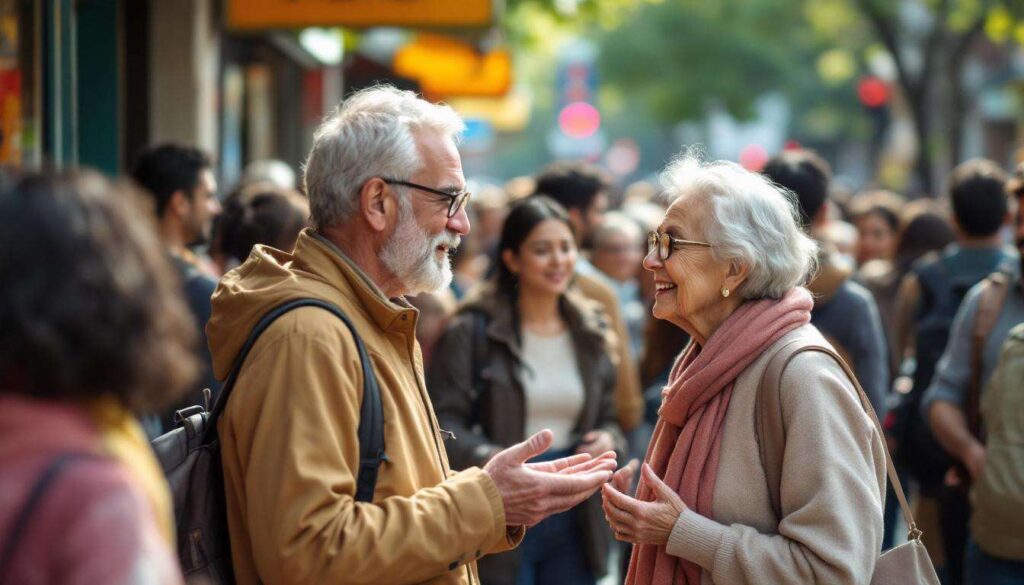
Standing in a queue at the supermarket or waiting to board a bus, most people focus solely on their own needs and schedules. Yet occasionally, someone steps aside and gestures for another to go ahead. This simple act reveals a sophisticated form of situational awareness that extends beyond mere politeness. Those who let others go first demonstrate an ability to read their environment, assess the needs of those around them, and respond with genuine consideration. Such behaviour reflects a deeper understanding of human interaction and social dynamics that remains surprisingly uncommon in our fast-paced society.
Understanding situational awareness: a rare asset
What defines situational awareness
Situational awareness involves the conscious perception of elements within one’s environment, the comprehension of their meaning, and the projection of their status in the near future. In practical terms, it means noticing what happens around you and understanding the implications of those observations. People with strong situational awareness can identify when someone behind them appears rushed, when a parent struggles with young children, or when an elderly person needs assistance.
The cognitive elements involved
This form of awareness requires several mental processes working simultaneously:
- Active observation of the surrounding environment
- Recognition of non-verbal cues and body language
- Assessment of relative urgency or need
- Quick decision-making about appropriate responses
- Willingness to act despite potential personal inconvenience
Research in cognitive psychology suggests that situational awareness draws upon both analytical and emotional intelligence. It requires the brain to process multiple streams of information whilst maintaining focus on one’s own objectives. This dual processing explains why such awareness remains relatively rare, as many people become absorbed in their own thoughts or digital devices.
Why it stands out in modern society
Contemporary life encourages self-focus through various mechanisms. Mobile phones demand constant attention, whilst societal messages often emphasise personal achievement and efficiency. Against this backdrop, those who maintain awareness of others demonstrate a deliberate choice to remain connected to their physical environment and the people within it. This choice becomes increasingly valuable as our collective attention fragments across multiple platforms and priorities.
Understanding this framework helps explain why the gesture of letting someone go first carries such significance, moving beyond simple etiquette into something more meaningful.
The art of letting others pass: courtesy or gift ?
Beyond basic manners
Whilst traditional courtesy involves following established social rules, letting someone go first often transcends these basic expectations. It represents a voluntary sacrifice of one’s position based on observed need rather than obligation. This distinction matters because it reflects active engagement rather than passive compliance with social norms.
The decision-making process
When someone chooses to yield their place in line, they typically engage in rapid assessment:
| Factor assessed | Consideration |
|---|---|
| Urgency | Does the other person appear rushed or stressed ? |
| Physical need | Would standing longer cause discomfort or difficulty ? |
| Circumstance | Is the person managing children, illness, or heavy items ? |
| Personal cost | How much inconvenience would yielding cause ? |
This mental calculation happens within seconds, demonstrating both cognitive efficiency and emotional attunement. The person who lets others pass has developed an internal framework for making such decisions quickly and confidently.
The gift of time and dignity
By allowing someone to go ahead, individuals offer more than mere convenience. They provide recognition that the other person’s needs matter and deserve consideration. This acknowledgement carries particular weight for those who often feel invisible in society: the elderly, parents with young children, or people with non-visible disabilities. The gesture says “I see you, and your situation matters” without requiring verbal explanation or justification.
These psychological dimensions reveal why such acts resonate so deeply with both recipients and observers.
The psychological benefits of yielding
Positive effects on the giver
Contrary to the assumption that yielding one’s place creates frustration, research indicates that prosocial behaviour generates significant psychological rewards. People who regularly engage in small acts of kindness report higher levels of life satisfaction and emotional wellbeing. The act of letting someone go first triggers the release of neurotransmitters associated with pleasure and social bonding.
Additional benefits include:
- Enhanced sense of personal agency and control
- Reinforcement of positive self-identity
- Reduced stress through focus on others rather than personal impatience
- Increased feelings of social connection
- Greater overall life satisfaction
Impact on the recipient
For those who receive this consideration, the psychological impact extends beyond simple gratitude. Being allowed to go first can restore faith in human kindness, particularly during stressful moments. It provides tangible evidence that others notice and care about one’s circumstances, countering feelings of isolation or invisibility that many people experience in crowded public spaces.
The ripple effect on mood and behaviour
Studies on prosocial behaviour demonstrate that witnessing acts of kindness influences observers to behave more generously themselves. When someone sees another person yield their place in line, they become more likely to perform similar acts. This creates a positive behavioural cascade that can elevate the social atmosphere of an entire environment, from a single shop to a broader community.
These individual and collective benefits connect directly to broader social patterns and community cohesion.
The social impact of respecting the queue
Queues as social microcosms
Queues represent miniature societies with implicit rules, hierarchies, and expectations. How people behave whilst waiting reveals fundamental attitudes about fairness, patience, and mutual respect. Those who let others go first demonstrate a flexible interpretation of queue fairness that prioritises need over strict chronological order.
Building community through small gestures
Repeated acts of consideration in public spaces contribute to community identity and social trust. When such behaviour becomes normalised within a particular environment, it establishes a culture where people feel safer, more valued, and more connected to those around them. This social capital proves invaluable during times of collective stress or challenge.
Challenging the scarcity mindset
Modern consumer culture often promotes a scarcity mentality where individuals feel they must compete for limited resources, including time and attention. Letting someone go first directly challenges this worldview by demonstrating abundance thinking. It suggests that a few extra minutes rarely constitute genuine hardship and that generosity need not deplete one’s own wellbeing.
This philosophical shift connects intimately with the role of empathy in shaping daily interactions.
The importance of empathy in daily interactions
Empathy as a practical skill
Empathy involves more than abstract compassion; it requires active imagination about others’ experiences and circumstances. When someone lets another person go first, they exercise practical empathy by considering how the wait might feel from that person’s perspective. This cognitive exercise strengthens empathetic capacity over time, making such responses increasingly automatic.
Recognising invisible struggles
Many challenges people face remain invisible to casual observation:
- Chronic pain conditions that make standing difficult
- Mental health challenges that increase stress in crowded spaces
- Time pressures related to caregiving responsibilities
- Financial anxiety about missing work or appointments
- Invisible disabilities that affect energy and endurance
Those who regularly yield their place often develop sensitivity to these hidden difficulties, recognising that they cannot fully know another person’s situation. This awareness fosters humility and generosity in daily interactions.
Creating a culture of mutual support
When empathy guides behaviour in public spaces, it establishes expectations that people will look out for one another. This cultural norm reduces social isolation and increases collective resilience. Communities where such practices thrive typically report higher levels of social cohesion and lower levels of antisocial behaviour.
Recognising these benefits naturally raises questions about how society might cultivate such behaviour more broadly.
How to encourage this practice in today’s society
Educational approaches
Teaching situational awareness and empathetic behaviour should begin early. Schools can incorporate social awareness training that helps children notice and respond to others’ needs. Role-playing exercises, discussions about perspective-taking, and recognition of prosocial behaviour all contribute to developing these capacities.
Modelling behaviour
Adults who consistently demonstrate consideration in public spaces provide powerful examples for others, particularly children. Parents, teachers, and community leaders who make their decision-making visible help others understand the thought processes behind such acts. Explaining why you’re letting someone go first teaches the reasoning behind the behaviour.
Structural and environmental changes
Physical environments can be designed to encourage prosocial behaviour:
- Priority queues that acknowledge specific needs
- Signage that reminds people to consider others
- Seating arrangements that facilitate awareness of surroundings
- Reduced reliance on self-service technologies that eliminate human interaction
Media and cultural narratives
Stories celebrating everyday kindness help normalise such behaviour. When media outlets highlight acts of consideration rather than exclusively focusing on conflict or competition, they shape cultural expectations about appropriate behaviour. Social media campaigns that encourage and document small acts of kindness can amplify these messages.
The cultivation of situational awareness and empathetic behaviour represents an investment in social cohesion that yields returns far exceeding the modest cost of a few extra minutes in a queue. Those who let others go first demonstrate that attention to our surroundings and consideration for fellow humans need not disappear amidst modern life’s demands. Their example reminds us that small gestures carry profound meaning, building connections that strengthen the social fabric one interaction at a time. By recognising and valuing this rare form of awareness, society takes a step towards reclaiming the human dimension of public spaces and daily encounters.