
Every step you take communicates something about who you are. Behavioural psychologists have long studied the subtle ways our physical movements betray inner thoughts, emotions and personality characteristics. Walking, one of our most automatic activities, serves as a fascinating window into the human psyche. The way we move through space reveals far more than we might imagine about our confidence levels, emotional states and fundamental character traits. Recent research in gait analysis has demonstrated that trained observers can identify specific personality markers simply by watching someone walk across a room.
Understanding behavioural analysis of the gait
The science behind gait analysis
Behavioural psychology examines how physical movements correlate with psychological states. Gait analysis focuses specifically on the biomechanics and patterns of walking. Researchers measure various components including stride length, cadence, arm swing and weight distribution. These measurements provide quantifiable data that can be matched against personality assessments and emotional evaluations.
Studies conducted at universities worldwide have established clear connections between walking patterns and psychological profiles. The Journal of Personality and Social Psychology has published numerous papers demonstrating that observers can accurately assess traits such as extraversion, neuroticism and agreeableness simply by watching brief video clips of people walking.
Key elements examined in walking patterns
Behavioural analysts focus on several crucial aspects when evaluating gait:
- Speed and rhythm of steps
- Arm movement and coordination
- Head position and stability
- Shoulder alignment and tension
- Hip rotation and flexibility
- Foot placement and weight transfer
Each element provides distinct information about a person’s psychological state and personality structure. The combination of these factors creates a unique walking signature as individual as a fingerprint.
Understanding these foundational principles allows us to explore specific walking characteristics and their psychological meanings, beginning with the most obvious variable: speed.
Walking slowly or quickly: what it means
The psychology of fast walkers
People who walk quickly typically exhibit high levels of energy and motivation. Fast walkers often score higher on measures of conscientiousness and extraversion. They tend to be goal-oriented individuals who value efficiency and productivity. Research indicates that rapid walkers generally possess greater confidence and assertiveness in social situations.
However, excessive speed can sometimes indicate anxiety or impatience. Context matters significantly when interpreting walking pace. A consistently hurried gait in relaxed environments may suggest underlying stress or difficulty being present in the moment.
What slow walking reveals
Slower walkers demonstrate different psychological characteristics. They often show greater mindfulness and present-moment awareness. These individuals may be more contemplative and introspective by nature. Slow walking can indicate:
- Thoughtful decision-making processes
- Lower levels of time urgency
- Greater attention to surroundings
- Possible fatigue or low energy states
- Cautious personality tendencies
The emotional state significantly influences walking speed. Depression and sadness typically slow gait, whilst excitement and happiness accelerate it. Chronic slow walking patterns, however, reflect more stable personality characteristics rather than temporary moods.
Whilst pace provides valuable information, the direction of visual attention during walking offers equally revealing insights into personality.
The direction of your gaze: a revealing clue
Downward gaze patterns
Individuals who consistently look downwards whilst walking often display introversion and self-consciousness. This gaze pattern may indicate social anxiety or low self-esteem. However, cultural factors influence eye behaviour significantly, and downward gazes can also reflect respect and humility in certain contexts.
Downward-looking walkers tend to be more internally focused, processing their own thoughts rather than engaging with external stimuli. This doesn’t necessarily indicate negativity but rather a preference for internal reflection.
Forward and upward visual focus
Those who maintain a forward or slightly upward gaze typically demonstrate greater confidence and openness. These individuals show comfort with their environment and willingness to engage with others. A forward gaze correlates with:
- Higher self-confidence levels
- Extraversion and sociability
- Optimistic outlook
- Leadership qualities
- Assertiveness in interactions
Scanning and observant walkers
Some people actively scan their environment whilst walking, moving their gaze across different points of interest. This pattern suggests curiosity and vigilance. Such individuals often score high on openness to experience and may possess naturally inquisitive personalities. Security-conscious individuals also exhibit scanning behaviours, though motivated by caution rather than curiosity.
Beyond where we look, how we hold ourselves whilst walking provides another layer of personality information.
The influence of posture on perception
Upright versus slouched walking
Posture dramatically affects both how others perceive us and how we feel internally. Upright posture with shoulders back communicates confidence, competence and positive self-regard. Research demonstrates that people who walk with good posture actually experience improved mood and reduced stress hormones.
Conversely, slouched or hunched posture signals low confidence, sadness or defeat. Chronic poor posture may indicate depression, anxiety or persistent low self-esteem. The relationship works bidirectionally: adopting confident posture can improve psychological state, whilst negative emotions worsen physical carriage.
Shoulder and arm positioning
The position of shoulders and arms reveals additional personality information:
| Posture characteristic | Psychological interpretation |
|---|---|
| Relaxed, swinging arms | Confidence and ease |
| Stiff, close-to-body arms | Tension or guardedness |
| Asymmetric arm swing | Possible stress or discomfort |
| Hands in pockets | Casualness or concealment |
| Arms crossed whilst walking | Defensiveness or coldness |
These postural elements combine with other gait characteristics to create comprehensive personality profiles.
How gait reveals character traits
Extraversion and introversion in walking styles
Extraverts typically walk with larger, more expansive movements. They take up more space, move with greater energy and display more animated gestures. Their gait reflects their outward-focused attention and social confidence. Introverts demonstrate more contained, economical movements with less variation in rhythm and smaller spatial footprints.
Conscientiousness reflected in stride
Highly conscientious individuals walk with purposeful, regular strides. Their gait shows consistency and deliberateness. They maintain steady pace and rhythm, rarely meandering or making sudden directional changes. This walking style mirrors their organised, disciplined approach to life.
Neuroticism and gait irregularities
People scoring high on neuroticism often display less fluid, more irregular walking patterns. Their gait may show:
- Variable speed and rhythm
- Tension in shoulders and neck
- Restricted arm movement
- Hesitant or uncertain steps
- Frequent direction changes
These patterns reflect the underlying anxiety and emotional instability characteristic of high neuroticism. The body quite literally cannot maintain smooth, confident movement when the mind experiences persistent worry.
Whilst personality significantly shapes walking style, external factors also play crucial roles in determining how we move through space.
The impact of the environment on your walking style
Cultural influences on gait
Cultural background profoundly affects walking patterns. Different societies have distinct norms regarding appropriate pace, posture and spatial behaviour. Mediterranean cultures often embrace slower, more relaxed walking styles, whilst Northern European and North American cultures typically favour brisk, efficient movement. Asian cultures may emphasise smaller steps and more contained body movements.
Urban versus rural walking patterns
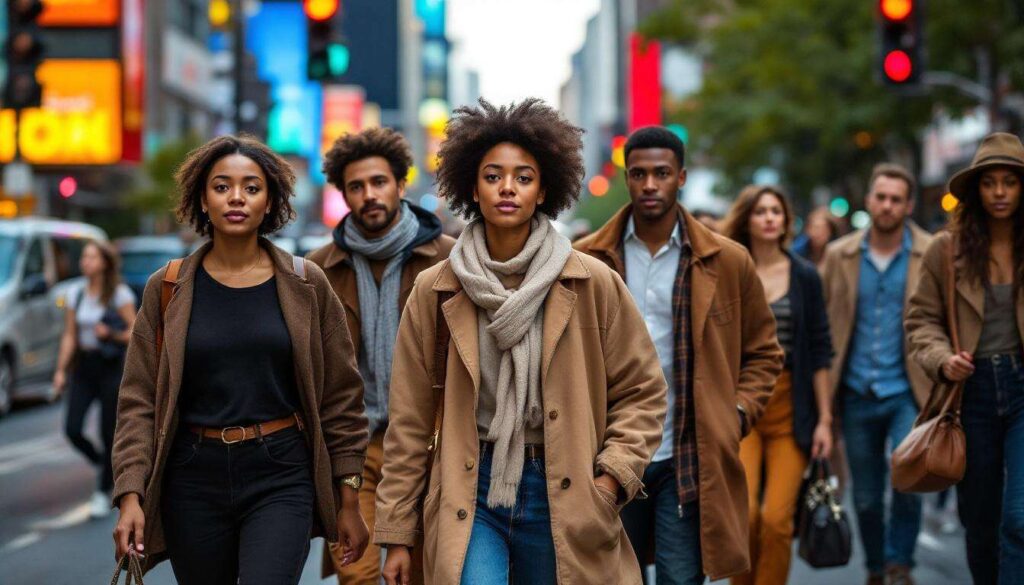
Environmental context shapes gait significantly. Urban dwellers typically walk faster, with more purposeful strides and less environmental scanning. Rural walkers often move more slowly, with greater awareness of surroundings. City walking involves navigating crowds and obstacles, creating more defensive, protective body language. Country walking allows for more open, relaxed postures.
Situational modifications to natural gait
Even individuals with established walking styles modify their gait based on circumstances:
- Job interviews prompt more controlled, careful walking
- Romantic contexts may slow pace and increase postural awareness
- Threatening environments trigger faster, more vigilant movement
- Familiar spaces allow natural personality expression
- Social pressure can suppress authentic walking styles
Understanding these environmental influences helps distinguish between temporary adaptations and genuine personality characteristics. True personality emerges most clearly in comfortable, familiar settings where social pressures remain minimal.
The way we walk provides remarkable insights into our psychological makeup. From pace and posture to gaze direction and stride characteristics, every element of gait communicates personality information. Behavioural psychology continues to refine our understanding of these connections, revealing that our most automatic movements betray our deepest character traits. Whilst environmental and cultural factors certainly influence walking patterns, consistent gait characteristics across varied contexts reveal authentic personality dimensions. Paying attention to how you and others move through space offers a valuable tool for understanding human psychology in action.